
Posted August 6, 2007
Solidarity held a 3-day conference on “Socialism and Environmental Justice” in New York City, July 20-22. Joel Kovel, author of this article, and other socialist, labor and environmental justice activists presented on topics ranging from the Uneasy Alliance of Labor and Environmental Justice to Feminism, Reproduction and the Environment. Some of the resources gathered by the summer school committee, grouped under several themes and questions, are available at the bottom of the page.
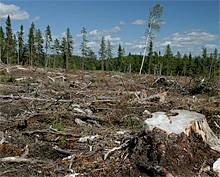
The optimism of the early years of the environmental movement has now quite faded. Despite certain useful interventions like greater recycling of garbage or the development of green zones, it is increasingly apparent that the whole mass of governmental regulations, environmental NGOs, and academic programs has failed to check the overall pace of ecological decay. Since the first Earth Day was proclaimed, in fact, the breakdown in crucial areas such as carbon emissions, the loss of barrier reefs and deforestation of the Amazon basin, has actually accelerated and even begun to assume an exponential character.
What had happened was that environmentalism had missed the point, and was dealing with external symptoms rather than the basic disease. Margaret Thatcher’s TINA – “There is no alternative” – doctrine did not spell it out in detail but there is no mistaking what she had in mind and stood for: There was to be no alternative to capitalism—to be exact, the renascent, harder-edged kind of capitalism which was being installed during the ’70s in place of the welfare-state capitalism that had prevailed for much of the century. This was a deliberate response to a serious accumulation crisis that had convinced the leaders of the global economy to install what we know as neoliberalism.
Neoliberalism is a return to the pure logic of capital; it is no passing storm but the true condition of the world we inhabit. It has effectively swept away such measures as had inhibited capital’s aggressivity, replacing and replaced them with naked exploitation of humanity and nature.
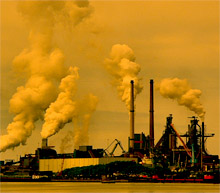
It is time to recognize the utter inadequacy of first-wave environmentalism’s basic premises and forms of organization. It is capital itself that places us on a track to ecological chaos. Capitalism requires continual growth of the economic product; and since this growth is for the sake of capital and not real human need, capital’s effect is the continual destabilization of an integral relationship to nature. The essential reason for this lies in capitalism’s distinctive difference from all other modes of production, that it is organized about the production of capital itself, a purely abstract, numerical entity with no internal limit. Hence it drags the material natural world, which very definitely has limits, along on its mad quest for value and surplus value, and can do nothing else.
Any socialism worthy of the name will have to be ecologically—or to be more exact, “ecocentrically”— oriented, that is, will have to be an “ecosocialism” devoted to restoring the integrity of our relationship to nature. The distinction between ecosocialism and the “first-epoch” socialisms of the last century is not merely terminological, as though for ecosocialism we simply need worker control over the industrial apparatus and some good environmental regulation. We do need worker control in ecosocialism as we did in the socialism of the “first epoch,” for unless the producers are free there is no overcoming of capitalism. But the ecological aspect also calls into question the very character of production itself.
It is plain that production will have to shift from being dominated by exchange—the path of the commodity—to that which is for use, that is for the direct meeting of human needs. But this in turn requires definition; and in the context of ecological crisis, “use” can only mean those set of needs essential for the overcoming of the ecological crisis—for this is the greatest need for civilization as a whole, and therefore for each woman and man within it.
Production within ecosocialism is to be oriented toward the mending of ecosystemic damage and indeed, the making of flourishing ecosystems.

Ecosocialism is no more a purely economic matter than was socialism or communism in the eyes of Marx. It needs to be precisely the radical transformation of society—and human existence—that Marx envisioned as the next stage in human evolution—and must be that if we are going to survive the ecological crisis. Ecosocialism is the ushering in, then, of a whole mode of production, one in which freely associated labor produces flourishing ecosystems rather than commodities.
Most definitely, this raises far more questions than it answers: that is, simply, a measure of how profound the ecological crisis is. What, after all, would life look like if we stopped pouring carbon into the atmosphere and allowed the climate ecosystem to re-equilibrate, that is, be healed? How, really, are we to live fully human lives in harmony with nature given the tremendous horrors built into our system of society? There is no certainty of outcome. But there is one certainty we have to build: There must be an alternative.
This is an abbreviated version of an article by Joel Kovel originally published in New Socialist (Summer 2007).